Body trimmer pulling hair is one of the most common grooming complaints among users. Instead of cutting hair cleanly, the trimmer may tug, pull, or snag hair, making the grooming experience uncomfortable and frustrating. In most cases, the problem is caused by blade condition, improper trimming technique, maintenance issues, or hair characteristics rather than a complete product failure.
The good news is that many hair-pulling problems can be solved with simple adjustments. Understanding why a body trimmer pulls hair can help users improve comfort, reduce skin irritation, and restore smoother trimming performance.
Why body trimmers pull hair instead of cutting it
A body trimmer is designed to guide hair into the cutting blades and remove it efficiently. When this process is interrupted, the blades may catch or tug hair before cutting it completely.
This often happens when:
- blades become dull
- hair is too long for the initial pass
- guard combs are used incorrectly
- debris blocks the cutting system
- trimming speed is inconsistent
In many situations, the trimmer itself is not defective. Instead, one or more factors are preventing the blade system from cutting hair as efficiently as intended.
Dull or worn blades are one of the most common causes
One of the biggest reasons for body trimmer pulling hair is blade wear. Even high-quality blades gradually lose cutting efficiency after extended use.
When blades become less effective, they may:
- grab hair before cutting
- require multiple passes
- create uneven trimming results
- increase skin discomfort
Users often notice that a trimmer which previously worked smoothly begins pulling hair more frequently over time. This is usually a sign that the blade system needs cleaning, maintenance, or eventual replacement.
Regular blade inspection helps maintain trimming performance and prevents unnecessary discomfort.
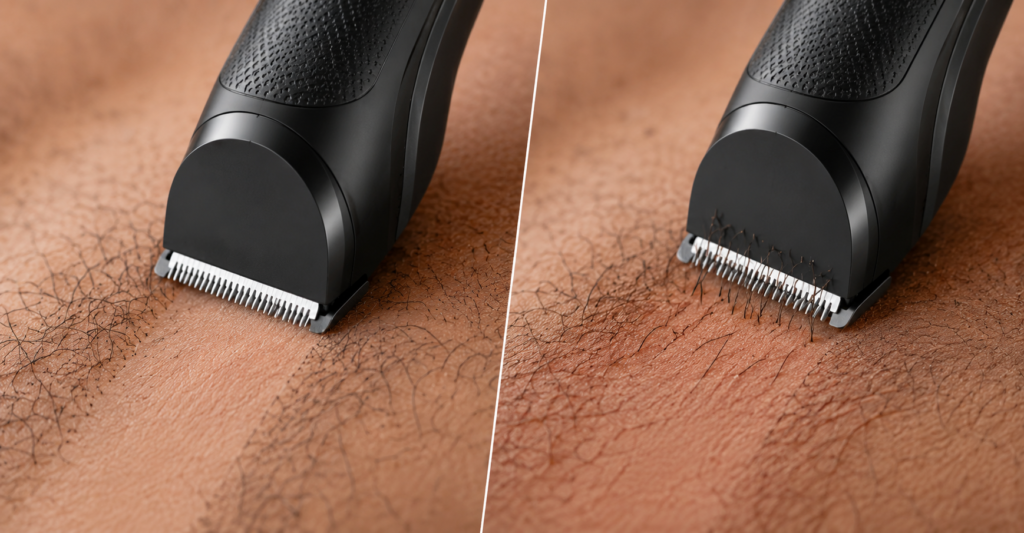
Long hair can increase pulling during trimming
Many users attempt to trim longer body hair directly with a short guard setting. This often increases the chance of pulling because longer hairs may bend, twist, or enter the blade system unevenly.
For thicker areas such as:
- chest hair
- leg hair
- stomach hair
- back hair
it is often helpful to start with a longer guard size before moving to shorter trimming lengths.
This approach reduces stress on the blade system and allows hair to be removed more gradually and comfortably.
Dirty blades can reduce cutting efficiency
Hair fragments, skin oils, and grooming residue can accumulate around the cutting blades over time. When buildup becomes excessive, the blade system may not move as freely as intended.
As a result:
- cutting performance decreases
- friction increases
- blades may catch hair
- trimming feels less smooth
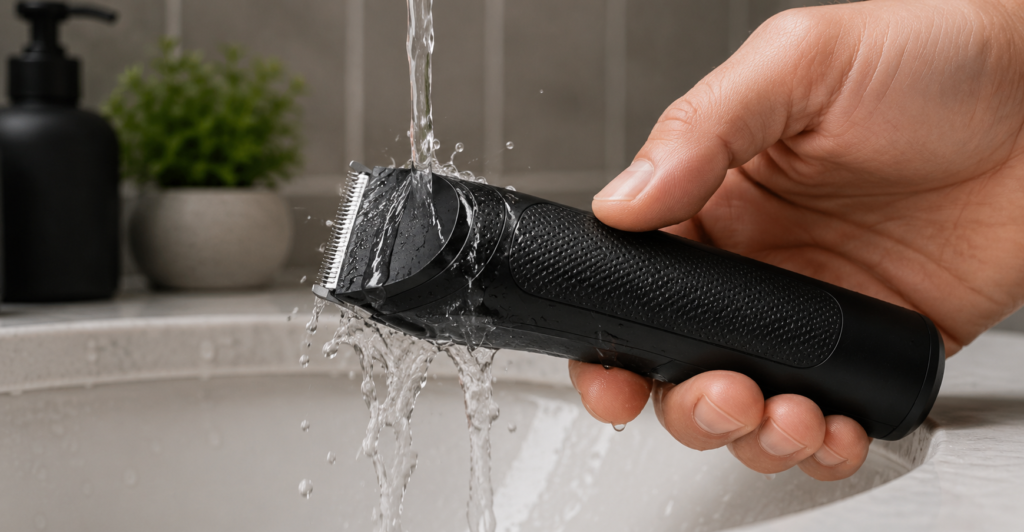
Many users are surprised to discover that a simple cleaning routine can significantly improve performance.
For waterproof body trimmers, rinsing according to manufacturer instructions can help remove debris and maintain efficient blade movement.
Incorrect trimming technique may also contribute
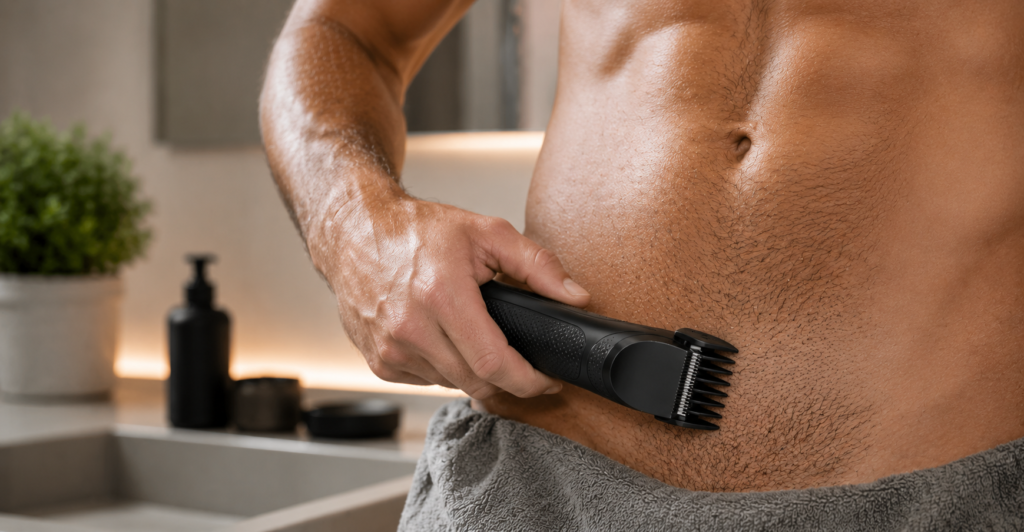
Sometimes the problem is not the trimmer itself. Body trimmer pulling hair can occur when users move the device too quickly, press too hard, or trim against difficult hair growth patterns.
For better results:
- keep the skin relatively flat
- move slowly and steadily
- avoid excessive pressure
- trim in multiple directions when needed
- use appropriate guard sizes
Body hair often grows in different directions depending on the area being trimmed. Adjusting trimming angles can improve cutting efficiency and reduce snagging.
Low battery power can affect trimming performance
Some rechargeable body trimmers may deliver reduced cutting performance when battery levels become very low.
Although modern lithium battery systems are generally stable, insufficient power can occasionally result in:
- slower blade movement
- reduced cutting force
- increased hair pulling
If hair pulling suddenly appears after long periods of use between charges, fully charging the device may help improve performance.
This is especially important for older trimmers whose batteries may have experienced natural capacity loss over time.
Hair type can influence trimming comfort
Not all body hair behaves the same way during grooming. Coarse, curly, or dense hair can place greater demands on the blade system.
Users with thicker hair may notice:
- more resistance during trimming
- slower cutting speeds
- increased pulling if blades are worn
This does not necessarily indicate a problem with the trimmer. It simply means that certain hair types may require more careful trimming techniques and consistent maintenance.
For these users, high-quality blade systems and regular cleaning become even more important.
How to reduce body trimmer pulling hair
The most effective ways to reduce hair pulling include:
- clean blades regularly
- replace worn blade systems when necessary
- fully charge the trimmer before use
- start with longer guard sizes for thick hair
- trim slowly and evenly
- follow recommended maintenance procedures
Combining these habits can significantly improve grooming comfort and help maintain consistent trimming performance.
A simple troubleshooting guide
| Problem | Possible Cause | Suggested Solution |
|---|---|---|
| Hair pulling during every pass | Dull blades | Inspect or replace blades |
| Pulling only on long hair | Hair length too long | Start with a longer guard |
| Reduced cutting performance | Dirty blades | Clean blade system |
| Pulling when battery is low | Reduced power | Fully recharge device |
| Uneven trimming results | Incorrect technique | Slow down and adjust trimming angle |
| Increased discomfort over time | General blade wear | Perform maintenance or replacement |
Final thoughts
Body trimmer pulling hair is usually caused by blade wear, maintenance issues, trimming technique, or hair characteristics rather than a serious product defect. In many cases, simple cleaning, proper charging, and improved trimming methods can solve the problem quickly.
For consumers, understanding the causes of hair pulling can make grooming more comfortable and efficient. For brands and manufacturers, reducing hair-pulling issues through better blade design and user education remains an important part of delivering a high-quality grooming experience.
With proper maintenance and the right trimming approach, most body trimmers can continue providing smooth and comfortable performance for a long time.