
Body trimmer packaging is one of the most underestimated decisions in a B2B sourcing project. Most buyers focus heavily on the product itself and treat the box as an afterthought. But packaging does two jobs at once: it protects the product through shipping, handling, and retail display, and it communicates brand value to the customer before they ever open it. Getting both right is what separates a professional market launch from a forgettable one.
This guide covers the most common packaging types used in body trimmer projects, how each one performs under real conditions, and what buyers should consider when choosing the right format for their sales channel and target market.
Folding carton: the most widely used body trimmer packaging
The folding carton is the standard choice for most body trimmer packaging projects. It is manufactured from paperboard, printed flat, and assembled at the factory before packing. It offers a strong surface for full-color printing, brand graphics, feature icons, and retail barcode placement, making it well suited for ecommerce listings, retail shelves, and distributor channels.
A first-time Amazon seller once chose a folding carton with a glossy finish and spot UV logo treatment for their body trimmer launch. The packaging looked premium in product photography and translated well to their listing images. During fulfilment, however, they discovered that their carton was slightly undersized for the inner tray, which caused the box corners to split under compression in FBA storage.
After adjusting the structural dimensions and adding a 2mm clearance around the tray, the problem disappeared entirely. The lesson here is that folding carton design is not just about appearance. Wall thickness, internal dimensions, and tray fit all determine whether the box survives the supply chain. A visually strong folding carton that fails structurally undermines both the product and the brand.
Rigid box: when premium positioning requires a different structure
The rigid box, also called a set-up box or luxury box, is constructed from thick greyboard wrapped in printed or textured paper. Unlike a folding carton, it does not collapse flat and holds its shape permanently. This gives it a noticeably heavier, more premium feel in the hand, which directly influences how the customer perceives the product before opening it.

A European grooming brand sourcing an OEM body trimmer decided to use a rigid box for their flagship retail SKU. The unit cost of the packaging was significantly higher than a folding carton, but their retail buyer required a presentation format that matched the store’s premium shelf positioning. At the point of sale, the rigid box communicated quality that the product spec alone could not convey on a crowded shelf. For buyers targeting premium retail, gifting channels, or high-end ecommerce, rigid box packaging is not an indulgence. It is a commercial tool that justifies a higher price point and supports stronger margin conversation with retail partners.
Lid and base box: the practical choice for accessory-heavy kits
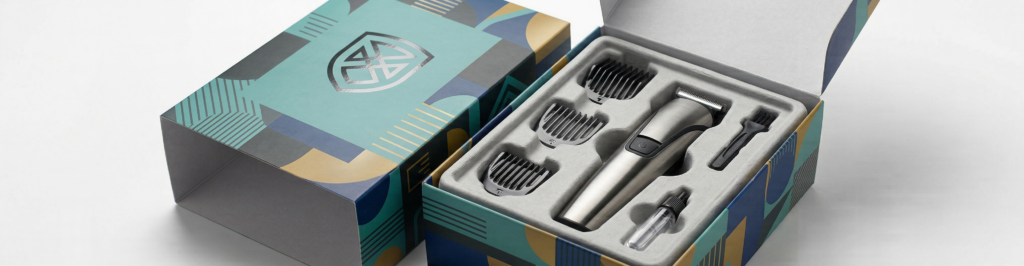
The lid and base box, sometimes called a top and bottom box or tray and lid, consists of two separate rigid or semi-rigid pieces that fit together. This format is especially useful when the body trimmer is sold with multiple accessories, such as guard combs, a charging cable, a cleaning brush, and a storage pouch, because the base tray can be designed with a custom insert that holds every component in a fixed, organized position.
This structure also performs well in drop tests. Because the lid and base overlap at the join, the box resists opening on impact far better than a simple folding carton with a tuck flap. For buyers shipping kits through cross-border logistics or multi-handling fulfilment networks, this structural advantage reduces damage rates and return costs.
Sleeve and tray packaging: clean retail presentation at lower cost
The sleeve and tray format combines a rigid or semi-rigid inner tray with a printed paperboard sleeve that slides over it. This approach gives the packaging a clean, minimal appearance while keeping production cost closer to a standard folding carton. The sleeve provides the full-color brand surface, and the tray holds the product and accessories securely.
This format works particularly well for buyers who want a premium visual result without committing to the cost of a full rigid box. It is also easier to customize across product variants, since the same tray can be reused with different sleeve artwork for different markets or SKUs.
What body trimmer packaging must survive before it reaches the customer
Drop protection, compression resistance, and moisture tolerance are the three structural requirements that matter most in body trimmer packaging. A box that looks excellent in a design file but fails any of these three tests creates real commercial problems: damaged products, customer complaints, return processing costs, and negative reviews that affect organic ranking and conversion.

Drop performance depends on wall thickness, corner construction, and how tightly the inner tray holds the product. Compression resistance depends on the greyboard or paperboard grade and how the box is stacked during storage and shipping. Moisture tolerance depends on whether the outer surface has a lamination layer that prevents softening in humid warehouse or transit conditions.
Buyers should ask factories for standard carton drop test results and request that inner tray dimensions be confirmed against the actual product and accessory set before mass production approval.
Final thoughts on body trimmer packaging
Body trimmer packaging is a brand decision as much as a logistics decision. The right format protects your product through the supply chain, communicates quality at the point of sale, and supports the price positioning you have worked to build. Folding cartons work well for most standard ecommerce and retail channels. Rigid boxes and lid and base formats serve premium positioning and accessory-heavy kits. Sleeve and tray designs offer a middle path between cost and presentation quality.
The buyers who get the most from their packaging investment are the ones who confirm structural requirements, internal dimensions, and print finish at the sample stage, before mass production begins. A strong body trimmer packaging decision made early saves time, reduces damage rates, and strengthens every sales channel the product enters.