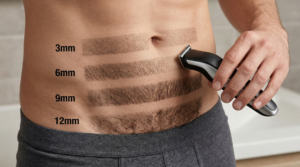
It’s a frustratingly common story. The air gets crisp, the holidays approach, and suddenly, your normal grooming routine turns against you. Shaving your chest or legs, which was effortless in July, now leaves your skin feeling tight, looking flaky, and overwhelmingly itchy. You’re left wondering, “Why?”-Shaving in the Winter
The answer is simple: your skin is under attack from the environment, and your shaving routine is (unintentionally) making it worse. Shaving dry skin isn’t just a minor inconvenience; it’s a specific challenge that requires a new strategy.
This article will explain exactly why your skin rebels in cold weather and provide a new winter grooming routine to ensure you stay smooth, comfortable, and itch-free all season long. For brands, understanding this seasonal pain point is a critical opportunity for seasonal marketing campaign and product differentiation.
The “Why”: The Perfect Storm for Dry, Itchy Skin
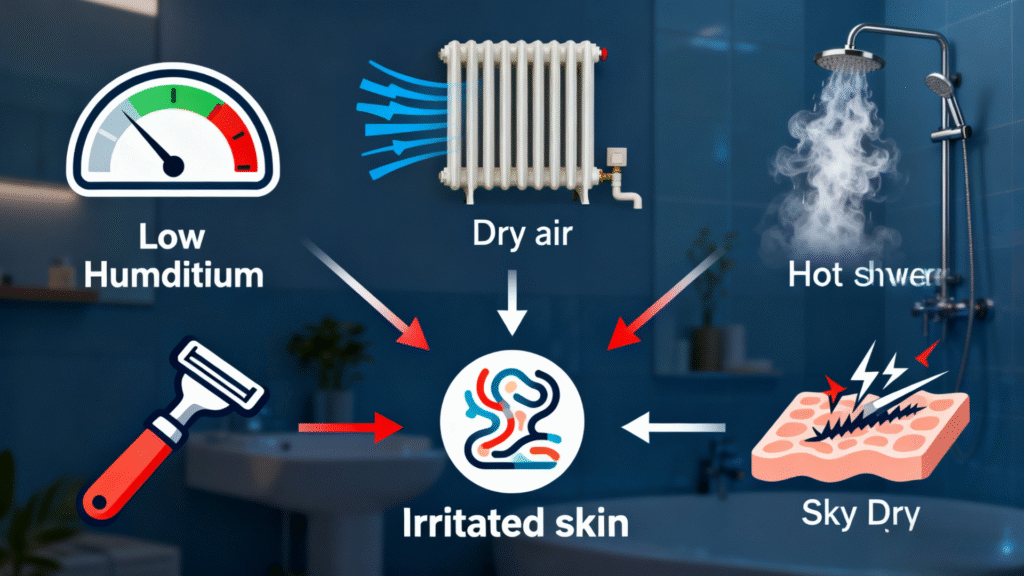
Your skin feels worse after shaving in the winter due to a combination of environmental and behavioral factors. You are facing a multi-front war against hydration.
- The Environmental Attack (Low Humidity): Cold air cannot hold as much moisture as warm air. This low-humidity environment acts like a sponge, constantly pulling moisture (a process called transepidermal water loss) from your skin, 24/7.
- The Indoor Attack (Central Heating): To combat the cold, we blast dry, hot air indoors. This “desert-like” indoor climate further accelerates moisture loss, leaving your skin’s protective barrier parched and weakened.
- The Habitual Attack (Hot Showers): Nothing feels better on a cold day than a long, scalding-hot shower. Unfortunately, this hot water strips your skin of its natural oils (sebum), which are essential for locking in moisture.
- The Grooming “Attack” (Exfoliation): Shaving is, at its core, an aggressive form of physical exfoliation. When you shave skin that is already dry, stressed, and has a compromised barrier, you’re not just cutting hair—you’re scraping away the few protective skin cells that are left. This leads directly to the micro-cuts, redness, and intense itchiness you feel afterward.
The B2B Insight: This is a predictable, seasonal customer pain point. Brands that shift their marketing message in Q4 and Q1 from “performance” to “comfort and protection” can win significant customer loyalty. This is the perfect time to launch a customer education campaign focused on cold weather skincare.
The Solution: A New 3-Step Routine for Shaving Dry Skin
You cannot change the weather, but you can absolutely change your routine. A successful winter grooming routine is less about hair removal and more about skin barrier protection.
Step 1: The Pre-Shave (Hydrate & Protect)
The goal of this stage is to add moisture and protection before the blade ever touches your skin. This is the most critical step to prevent irritation.
- Use Lukewarm Water: Stop taking scalding hot showers. A 10-minute lukewarm shower is all you need. This cleanses the skin without stripping its essential oils.
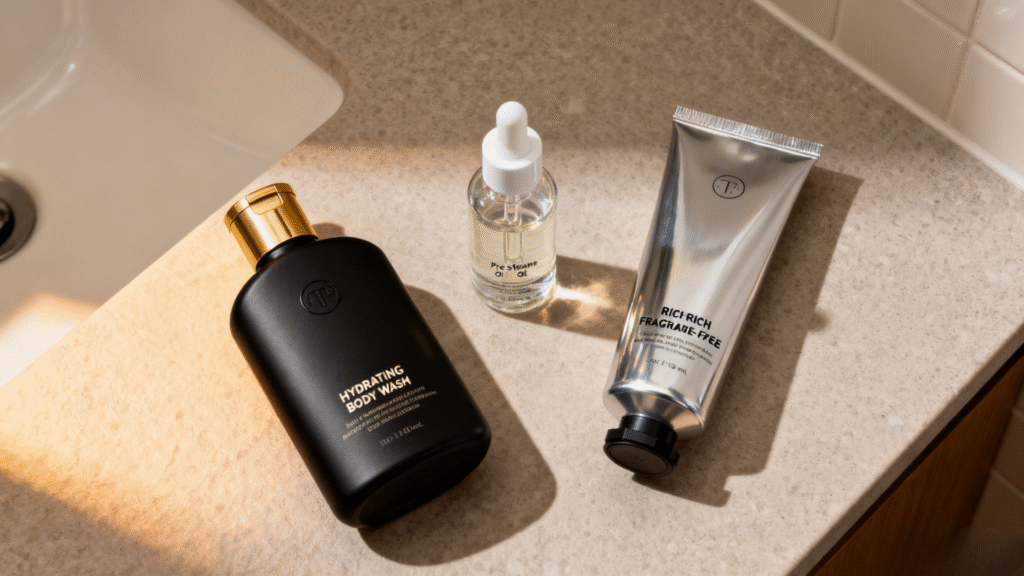
- Switch Your Cleanser: Ditch the harsh bar soap. Switch to a hydrating, soap-free, or creamy body wash. Look for ingredients like glycerin, ceramides, or hyaluronic acid.
- Try a Pre-Shave Oil: This is a game-changer for shaving dry skin. Applying a few drops of pre-shave oil to the area before your shaving cream creates an extra layer of lubrication. This provides a slick, protective barrier that helps the groomer glide, not drag.
- Use a Hydrating Shave Cream: Even if you use an electric groomer (especially for wet shaves), a high-quality, hydrating, fragrance-free shave cream is non-negotiable in the winter.
The B2B Insight: This stage is a massive cross-selling opportunity. This is the season to create a “Winter Shave Kit” bundle. By developing or co-branding a pre-shave oil and a hydrating shave cream as part of a grooming product ecosystem, you solve the customer’s entire problem, not just part of it.
Step 2: The Shave (Gentle & Efficient)
During this stage, your goal is minimal skin contact and maximum efficiency.
- Use a Spotless, Sharp Blade: A dull blade is the #1 enemy of dry skin. It requires more pressure and scrapes the skin instead of cutting the hair cleanly. This is a common cause of trimmer pulling hair. Clean your blades after every use and replace them regularly.
- Technique is Everything:
- Use Light Pressure: Let the tool do the work. Pressing down hard is what causes razor burn.
- Go With the Grain: At least for the first pass, shave in the direction your hair grows. This is the gentlest method. If you must have a closer shave, you can re-lather and very carefully shave against the grain.
- Consider Wet Shaving: While a quick dry shave is convenient, winter is the best time to embrace wet shaving. Using your waterproof body groomer in the shower with warm water and shave cream provides the ultimate combination of hydration and protection.
The B2B Insight: This is where the quality of your hardware shines. A product for dry skin needs a powerful motor and advanced blades (like ceramic). Why? Because a strong motor and a sharp blade can cut hair efficiently without requiring the user to press down hard, thereby minimizing irritation.
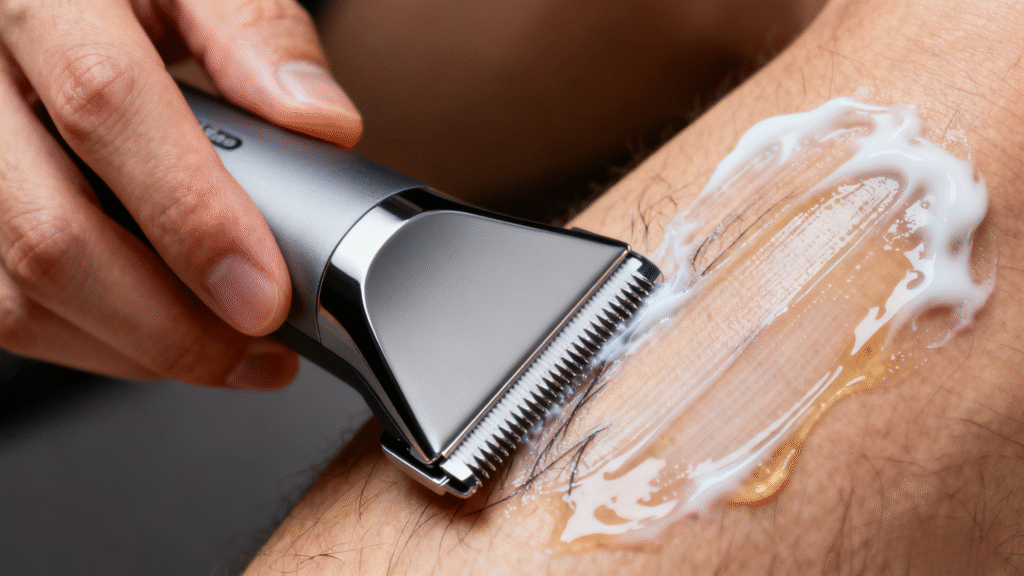
Step 3: The Post-Shave (Soothe & Seal)
This is the non-negotiable final step. You have just exfoliated your skin; now you must protect it.
- The 3-Minute Rule: You must apply moisturizer within 3 minutes of patting your skin dry. This is when your skin is most receptive and your pores are open, allowing you to lock in the moisture from the shower.
- Ditch the Alcohol: Check your aftershave. If it contains alcohol, throw it away (or save it for summer). Alcohol-based products will feel like fire on dry, freshly shaved skin and will dry it out even more.
- Choose a High-Quality Post-Shave Moisturizer: This is your hero product for the season. A lightweight summer lotion is not enough. You need a thicker, richer cream or balm.
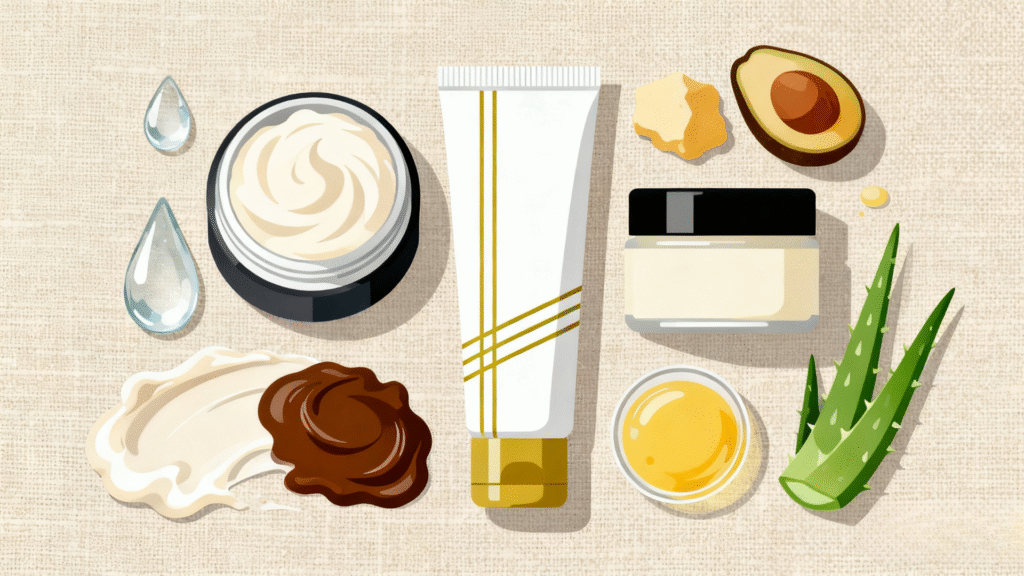
Here’s what to look for in a powerful post-shave moisturizer for dry skin:
| Ingredient Category | Examples | What It Does (The “Why”) |
| Humectants | Hyaluronic Acid, Glycerin | Pulls moisture from the air into your skin. Like a hydration magnet. |
| Emollients | Shea Butter, Jojoba Oil | Soften and smooth the skin’s surface, filling in any micro-cracks. |
| Occlusives | Ceramides, Petrolatum, Dimethicone | Create a physical barrier on top of the skin to seal the moisture in and protect from dry air. |
| Soothing Agents | Aloe Vera, Niacinamide, Allantoin | Act as anti-inflammatories to calm redness, stop the itch, and reduce irritation. |
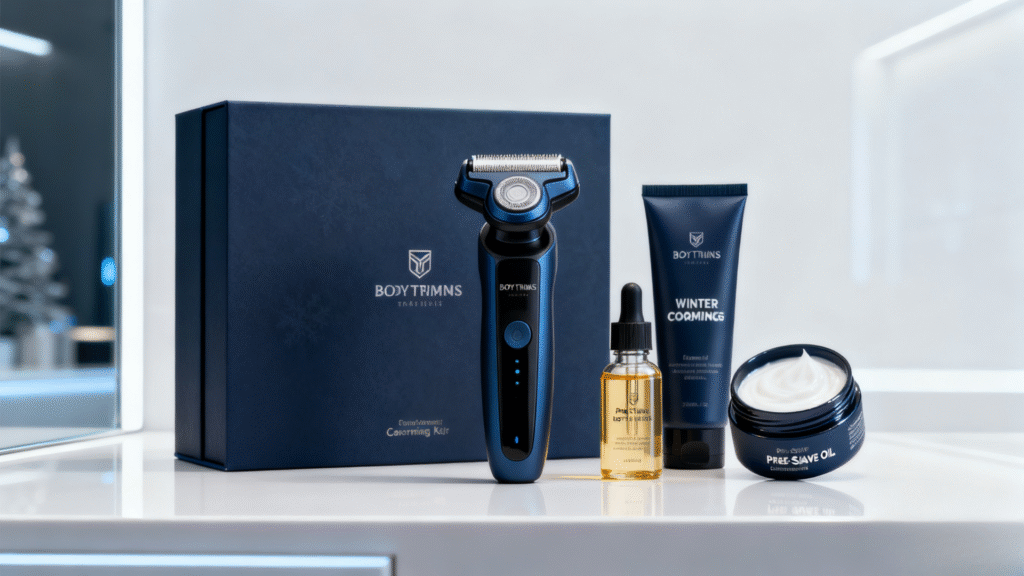
The B2B Insight: A high-quality post-shave moisturizer is not just an accessory; it is the solution to the problem of shaving dry skin. Brands that heavily market a “Post-Shave Recovery Balm” or “Winter Skin-Saver” as part of their seasonal marketing campaign will see significant success and build a reputation for truly understanding their customers’ needs.
Conclusion: Don’t Blame the Shave, Change the Routine
Winter itchiness is not an inevitable part of grooming. It’s simply a sign that your old routine is no longer working for the new season. By shifting your focus from speed to protection—by adding hydration before you shave and sealing it in after—you can easily prevent irritation in winter.
For brands, this seasonal shift is a golden opportunity. It’s the perfect time to prove you are an expert, not just a hardware seller. By providing this customer education content and offering a complete grooming product ecosystem (cleansers, balms), you solve your customer’s most pressing seasonal problem and win their loyalty for the entire year.
body trimmer market trends
Want to capitalize on leading body trimmer market trends in 2026? Contact us for bespoke OEM design, compliance management, and logistics partnerships tailored to your business size and customer segment. Unlock smart technology, sustainable materials, and effective e-commerce solutions at every stage of your next product launch. Visit https://www.gzaimeitech.com/ to connect with innovative manufacturers and stay ahead in the rapidly evolving body trimmer market.